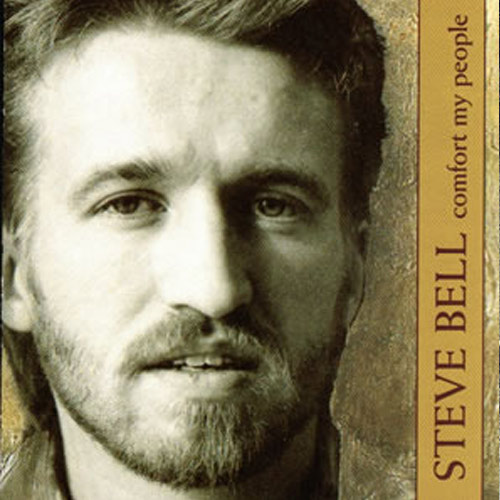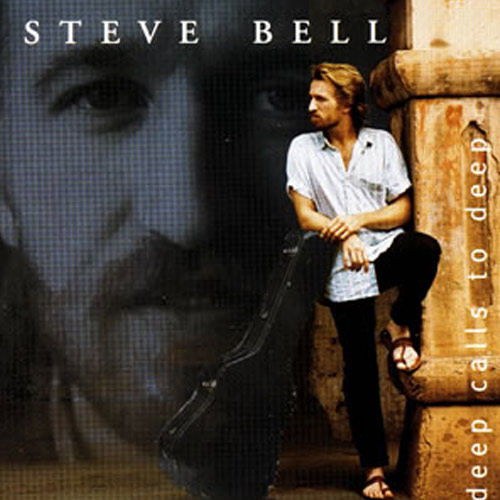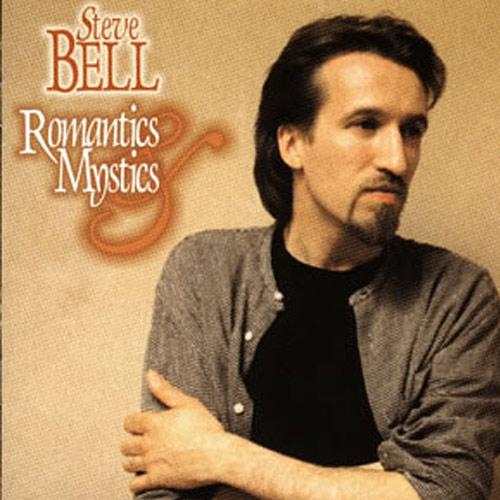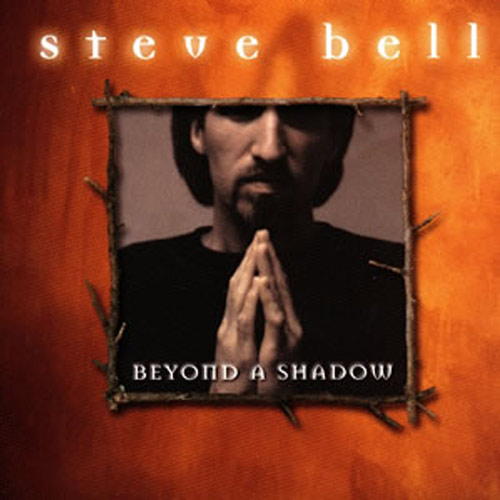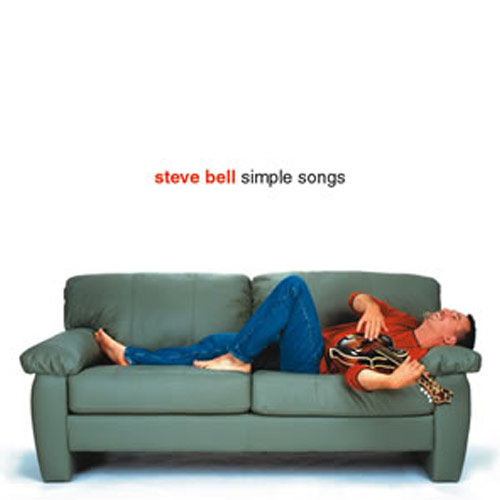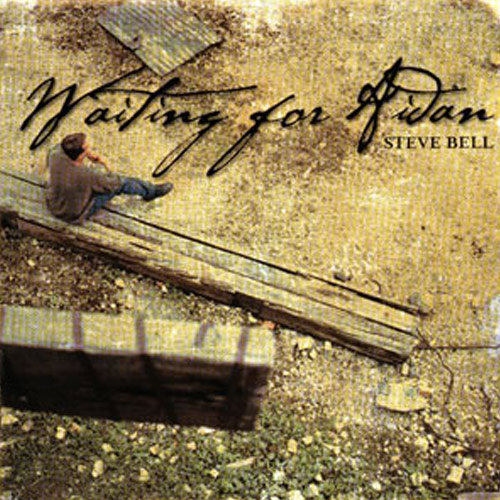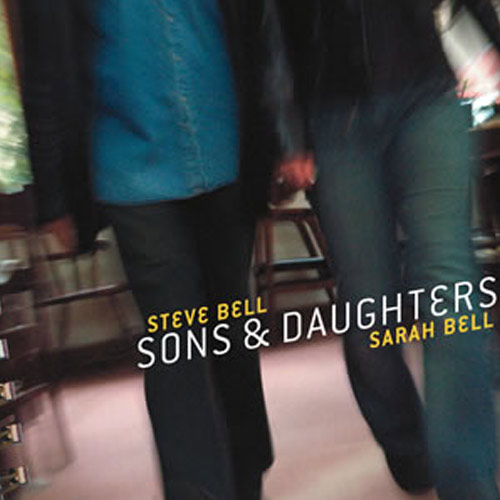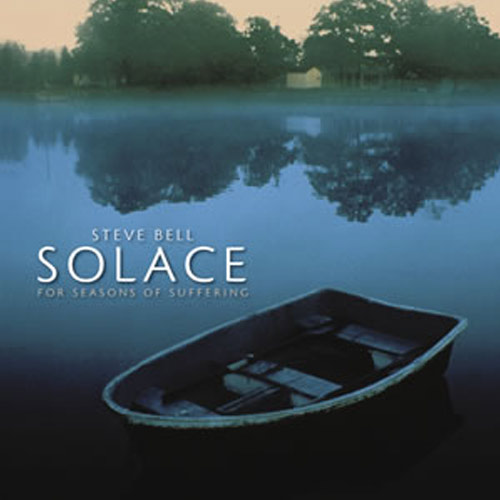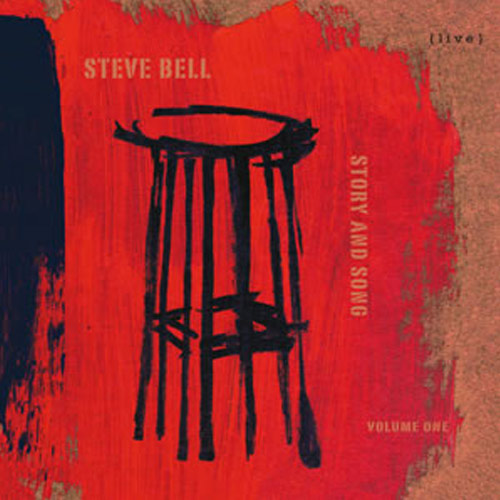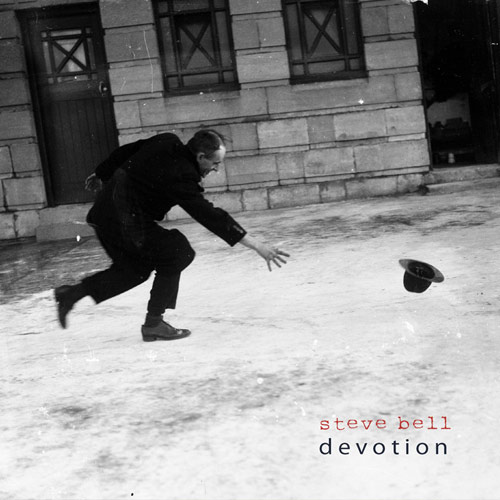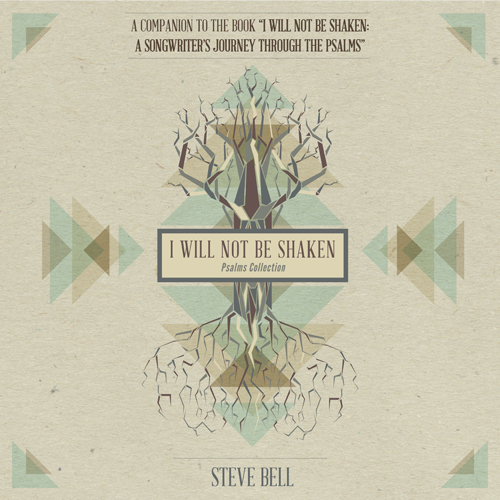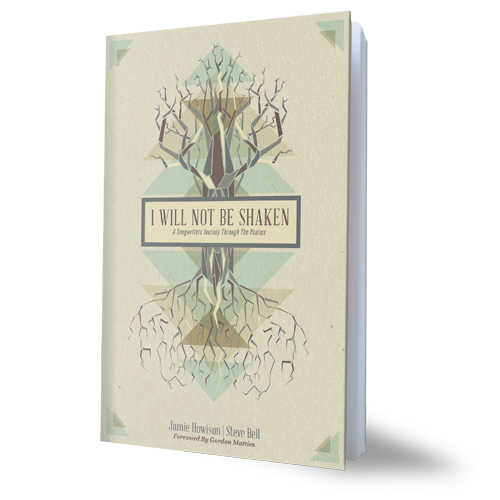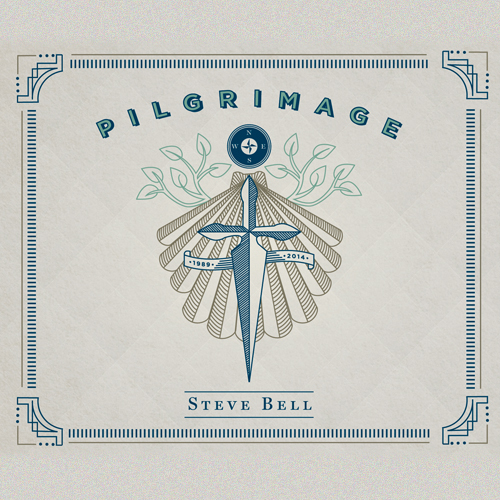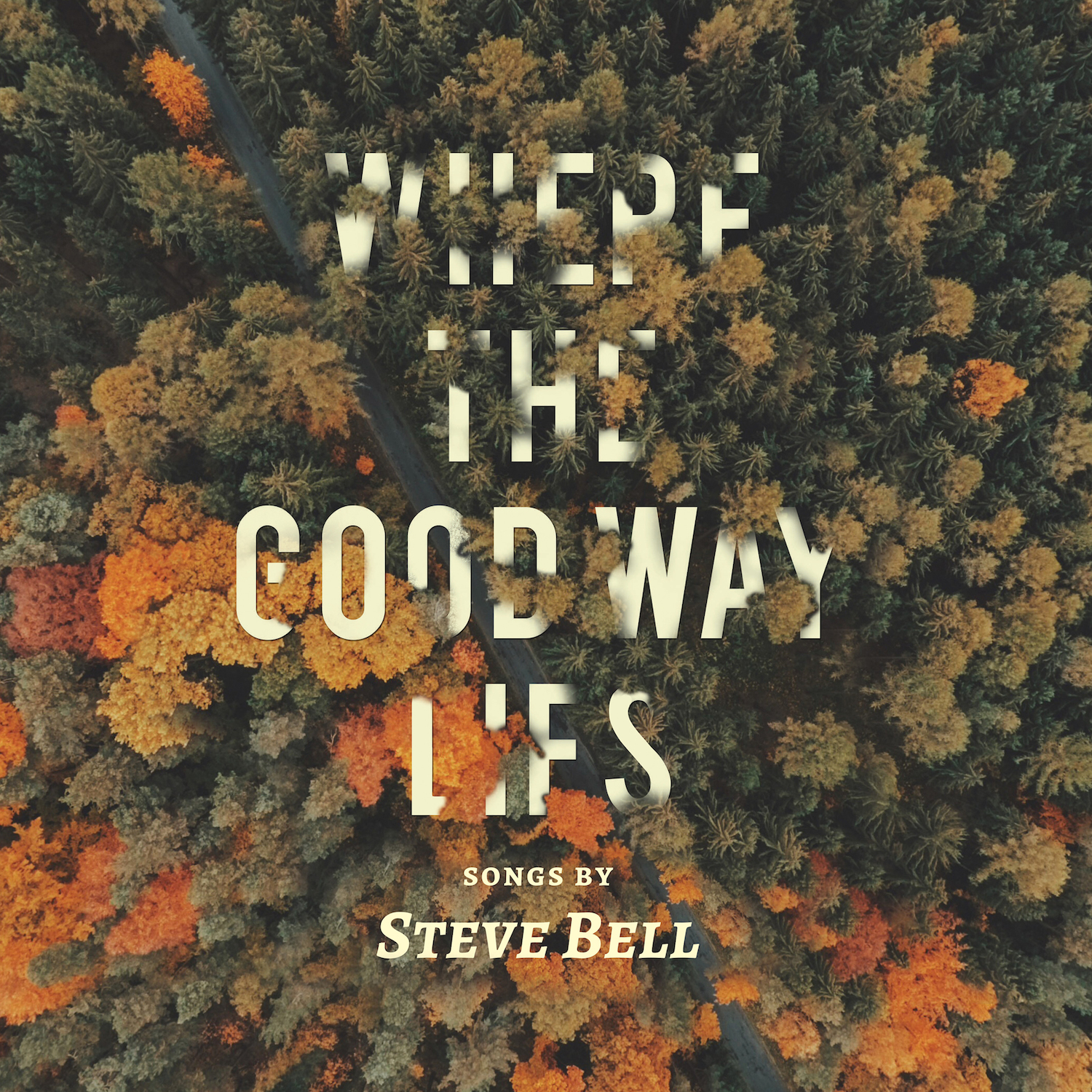
Steve Bell’s career statistics are certainly striking. Since releasing his first solo project – Comfort My People – in 1989, he has put out a total of 15 CDs, and they’ve sold over 300,000 copies independently. Add in three concert videos, four songbooks, and an estimated 1,500 concerts, and you have a body of work equaled by very few artists in any genre. Bell’s work has also brought him numerous industry accolades, including two JUNO Awards (Romantics & Mystics, 1998; Simple Songs, 2001), multiple Prairie Music, Covenant, Vibe, and Western Canadian Music Awards.
Beyond the numbers and the crowded trophy shelf lies the fact that Steve Bell’s songs, music, and concerts resonate deeply within the hearts and souls of his fans, providing both solace and inspiration. It is this connection, rather than platinum plaques to hang on the wall, that is Bell’s true goal and his most real achievement. “This is a social thing we are doing,” Steve explains; “It is public work, not just a musical commodity where we are trying to sell as many albums as we can.”
Steve takes his role as a storyteller very seriously. “When you tell stories, whether through song or through speaking, it is thrilling to watch people engage and respond so deeply. You realize what a service it is you are offering people. They might suddenly imagine a different universe or simply take needed, brief respite from their daily life. You can help them laugh or cry, and perhaps make emotional, social or spiritual connections they would not otherwise. When you’re onstage you can see it happening to people right in front of your eyes. That’s really magical.”
He is most commonly described as a Christian music artist, but it is perhaps more accurate to call Steve Bell an artist who happens to be a Christian. The responsibility of a singer/songwriter is to be true to oneself, and in Steve Bell’s case, that means continuing to explore his personal faith. “If that didn’t come out, I wouldn’t be a good artist because by definition I’d be dishonest,” Steve says; “I wouldn’t be mining what is going on. It is not that I ever chose to be a Christian artist. That is just what I am.”
Bell is quick to stress that his goal is to strive for excellence and honesty—”When I write my music I don’t have an agenda for the audience. I just want to write a good song. If my faith-walk sheds a light for someone and they can take a step forward in some way that they couldn’t otherwise, that’s great. But if a listener simply enjoys the melody and the poetry, that’s fine too. I don’t mind being known as a Christian musician but what I really want to be known as is a good musician. I still feel the goal is excellence and honesty,” —consider that, a goal achieved.
Steve Bell’s life story is a fascinating one. For instance, he first learned to play guitar in a medium-security penitentiary in Alberta! Steve picks up the story; “My father was the chaplain at Drumheller Prison. Some of the inmates were great guitar pickers in the Chet Atkins style. They asked my dad if they could have jam sessions in the chapel on Saturday afternoons, and he arranged for the guards to stay away so they had a place to play that wasn’t shrouded by relentless, penal authority. They’d sit in a circle and have these wonderful bluegrass jams. Once, my dad let me sit and watch and I was absolutely enthralled. When the inmates realized I wanted to play they invited me to grab a guitar and sit in. They treated me like a real peer, so not only did they teach me guitar, but this was the first circle of adult men to not treat me like a kid.” Looking back, Steve notes that, “One reason I tour the world now is because some of Canada’s most unwanted men invested in me when I was eight years old!”
Steve’s passion for music had revealed itself even earlier, and he credits his mother’s influence; “My mum was a classical pianist and she is a tremendous player. At night she’d often put us kids to bed, and then sit down at the piano until the wee hours. I remember drifting in and out of sleep being bathed in melody: Gershwin, the classics and hymns.
His mother also played electric guitar, an instrument that instantly captured the youngster’s imagination; “When she was playing I’d watch her hands and memorize everywhere she put them. If she went out to the garden, or into the basement to do laundry I’d grab that thing for five minutes and try it. Eventually I was caught, but as it worked out, my parents were impressed I could play and bought me my first guitar.”
Post prison education, Steve began playing the bar circuit in and around Winnipeg. His talent as a guitarist and vocalist were best showcased in the harmony-based trio Elias, Schritt and Bell, a group that found regional success. “I did that for about ten years full-time, from 1978 to the late ’80s,” he recalls; “I was jobbing. I’d play in country bands, dance bands, rock bands, whatever was needed to keep the bills paid. I didn’t even really see myself as a musician. I saw it as kind of a stop-gap thing until I figured out what to do with myself.”
The grind of playing the bars took its toll, Bell explains; “I eventually got married and had kids and the bar scene started to wear thin. It wasn’t going anywhere. I then had something of a spiritual experience, and I felt God speak to me saying, “this time of your life is over.’ I just upped and quit, and I stayed home with the kids while my wife Nanci went back to teaching. I really thought I was hanging up my guitar.”
Ironically, it was giving up his musical career that really kick-started his career. Being given time to reflect upon his life and explore his deepened faith enabled Steve Bell to become a songwriter. “All of a sudden music just started pouring out of me. Those first six months at home it was like a fire hose, a period of creativity I’ve never had since, or before. Every time I read something a song would come out. I’d go to church, hear a psalm and I’d write a song.”
Fate then intervened in the form of family friend Father Bob McDougall, who’d been the Catholic chaplain at Stony Mountain Prison when Steve’s father had been the Protestant chaplain there. “Bob suddenly showed up at my door, saying ‘you should do a Christian album’,” Steve recalls. “That hadn’t been on my radar at all. I thought I’d quit music. But he insisted, saying he’d pay for it. I checked with my friend Dave Zeglinski, who is now my manager, we came up with a cost figure, and Father Bob wrote the cheque. The initial print run was 200 cassette copies I hoped I could either sell or at least give away.”
In fact, Steve’s 1989 debut album, Comfort My People, took off, thanks to word of mouth. Pressure mounted on a reluctant Bell to return to performance, and he finally relented. “One pastor wouldn’t take no for an answer. I kept insisting I was a failed bar musician, but he said ‘ just come and do three songs and I’ll pay you $200,’ so I said yes.” Steve ended up playing a full set for the congregation at a Mennonite community in southern Manitoba, and this proved a life-changing experience. “That’s where I saw the simple vision of it. You can just go up, tell an honest story, sing an honest song and go home. There are worse ways to spend an evening. Things took off from there. I learned to trust my instincts onstage, I started storytelling, albums started selling, and I got more calls for concerts. It has grown very organically from there.”
More than 20 years later, Steve Bell is still telling honest stories and singing honest songs. You don’t need to be a Sherlock Holmes to detect the reasons for his phenomenal success. Aside from being a compelling storyteller and charismatic performer, Steve Bell writes (and covers) eloquent songs, frames them in accessible musical settings, and sings them in a gently melodic and charming vocal style. He cites the singer/songwriters of the ’70s as key influences on his music, noting, “I grew up on people like Kenny Loggins, Dan Fogelberg, James Taylor and Joni Mitchel.”
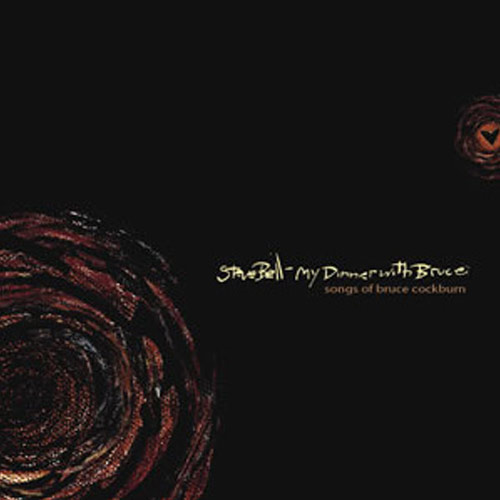
Another crucial creative inspiration has been Bruce Cockburn, as shown by Steve’s 2006 album, My Dinner with Bruce, a superb collection of Cockburn songs given fresh new life by Bell and awarded an enthusiastic thumbs-up by Cockburn himself. Back in 1997, Bell covered another Cockburn song, “Can I Go with You,” on his Romantics and Mystics album, and this led to a lovely Bruce-linked story; “I won my first Juno Award for that album,” Steve recalls, “On the night, after the ceremony was over, a gentleman came up to me in the hall and introduced himself as Bernie Finkelstein, Bruce’s manager. He said ‘I want you to know Bruce and I think that’s the best cover of any Cockburn song to date.’ I’d have traded in my Juno in a second for that! When one of your heroes speaks well of you, that’s a nice moment.”
The production and instrumental values of Steve Bell albums are of the highest order. He has long recruited some of Canada’s very best players to record and tour with him, with that impressive list including the likes of Hugh Marsh (Bruce Cockburn, Loreena McKennitt), Fergus Marsh, pianist Mike Janzen and guitar virtuosos Kevin Breit (Norah Jones, Cassandra Wilson) and Steve Dawson. “I always ensure that in any Steve Bell Band, I am the weakest link,” he says. “I learn like crazy and I play better when I’m around people like that. Those guys will suck the ego right out of you. You realize they’re in it for the music and the beauty of those moments.” Bell is being unduly modest about his guitar-playing ability, for fans attending his solo concerts are routinely impressed by his fluent mastery of the instrument.
Steve Bell has developed his own unique musical style, one that shines in vividly contrasting settings. Like any true troubadour, he can enchant—both in concert, and on disc—armed only with guitar and voice; something demonstrated on his completely solo 2000 album, Simple Songs.
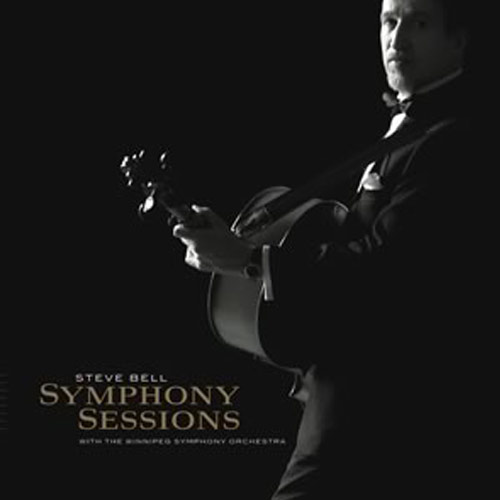
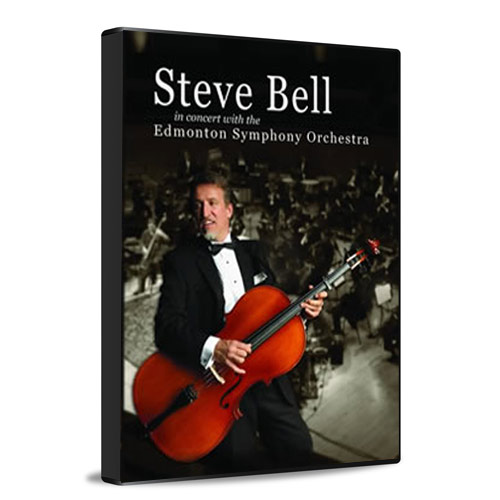
On the other end of the scale, he now has a flourishing career performing and recording with many of North America’s finest symphony orchestras. In fact, in recent years Bell has performed his material 24 times with nine different symphony orchestras, including the prestigious Nashville Symphony at Opryland, U.S.A. His 2007 album, Symphony Sessions, captures his magical collaboration with the Winnipeg Symphony Orchestra, while his 2008 DVD Steve Bell in Concert features the Edmonton Symphony Orchestra.
To Steve, this new side to his career is a happy accident. “Little good that has happened to us is because we thought of it,” he laughingly notes; “We got a call from the Winnipeg Symphony, and I assumed they wanted me to sing a Pops concert. They came back and said ‘no, we want a Steve Bell concert.’ It seemed a daunting task, but we took the risk. I hired my keyboardist, Mike Janzen, to do the scores, and the concert sold out. It was a magical evening. I remember looking out at my weeping dad in the audience. There I was onstage with the symphony and it was my music being celebrated by my community. I don’t know if I’ll ever have a higher moment than that.”
This musical magic has been replicated at numerous symphony concerts since. “We realized we are uniquely set up to do this, because of all the work we’ve done and the style of music,” says Bell; “There is something you can say with a symphony you can’t any other way. There’s a depth of beauty and majesty there. I believe we’ll spend a lot of time on the symphony concerts over the next 15 years.” The inherent melodic strength of Steve Bell’s material and its potential for musical expansion renders it perfect for translation to an orchestral setting. “I grew up being bathed in classical melodies,” he says; “When Mike started working with songs I’d written, we realized how easily they lent themselves to expansion.”
In the middle of the solo-to-symphony spectrum are Steve Bell Band gigs, described by Steve as, “pop-jazz oriented,” and spotlighting the prowess of his ace accompanists. He enjoys all formats equally. “Whether I’m on a stool by myself in rural Saskatchewan or singing with a symphony to 2,700 people.”
Amidst his intensive North American touring schedule, Bell has always found time to work on behalf of such worthy organizations as World Vision, Compassion Canada, and Canadian Foodgrains Bank, and his advocacy efforts have been worth millions to these causes. He has also traveled extensively in the Third World, spreading hope via his music and message to communities in India, Thailand, Bangladesh, the Philippines, Ethiopia, Palestine, Kenya, Guatemala, and many other countries.
Steve views such work as part of his responsibility as an artist. “To some degree, it is our job to go and have those experiences, bring them back, and find a way to articulate them. We are given unique opportunities and I think we have a social responsibility to help others experience things they wouldn’t otherwise. And perhaps, through our witness they become self-motivated to engage with some of the issues. If I can tell a story or sing a song that places someone in Calcutta or the Afar desert of Ethiopia, they’ll never be the same.”
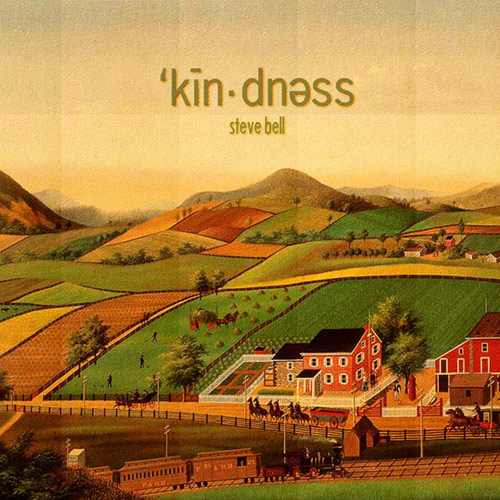
Steve Bell’s current focus is upon the release of his keenly anticipated new album, KIN.DNESS. Sharing production duties on the disc are Steve, long-time production partner and manager Dave Zeglinski, and Murray Pulver, from top country band Doc Walker. “Murray has really good ears and is very musical, so it’s great to have him on board,” says Steve. Bell is brimming with excitement over the new record calling it, “…possibly our best one yet. It is a little more groove-oriented, a little vibe-ier. You could say it has more of a New York singer/songwriter feel.” Players on the album include Bell’s long-time band mates Mike Janzen, bassist Gilles Fournier and drummer Daniel Roy, plus rising young guitar star, Joey Landreth.
KIN.DNESS will feature new original songs alongside tunes from some of Steve’s favorite writers. “Several of the songs on the album turned out to have a general underlying theme of kinship,” he says; “Kin is the root of kind, so we’re focusing on that meaning, whether between us and creation, or between peoples. I don’t usually have a preconceived theme for an album, but when I look back I often see one there.”
Do yourself a kindness. Check out the music of Steve Bell for yourself.
For more information, contact:
Dave Zeglinski
Signpost Music
1578 Erin Street
Winnipeg MB R3E 2T1
1 800 854-3499
dave@signpostmusic.com
More about Steve Bell at:
www.steve-bell.com
http://en.wikipedia.org/wiki/Steve_Bell_(musician)